Local detail
What Most People Get Wrong
The call usually starts the same way: "it was cold out, and the spring just went." It's a reasonable guess, but it doesn't hold up here. Camarillo sits in a mild temperate band, so the kind of hard freeze that makes steel brittle and snaps a spring overnight in colder parts of the country isn't the usual trigger in this town. Temperature swings are small and slow, not the sudden kind that shocks a spring into failing.
What's actually going on is simpler and less dramatic: most of the housing stock in this service area went up between 1956 and 1997, with the median build year landing around 1976. A torsion spring is rated for a set number of open-close cycles, somewhere around 10,000, and a door on a house that's been standing since the 1970s has put a lot of cycles on that spring whether or not the weather ever dipped. Cold doesn't help, but it's rarely the whole story. Age and use are doing the real work, and that's true whether the spring finally lets go in January or July.
The area
Checking It Yourself
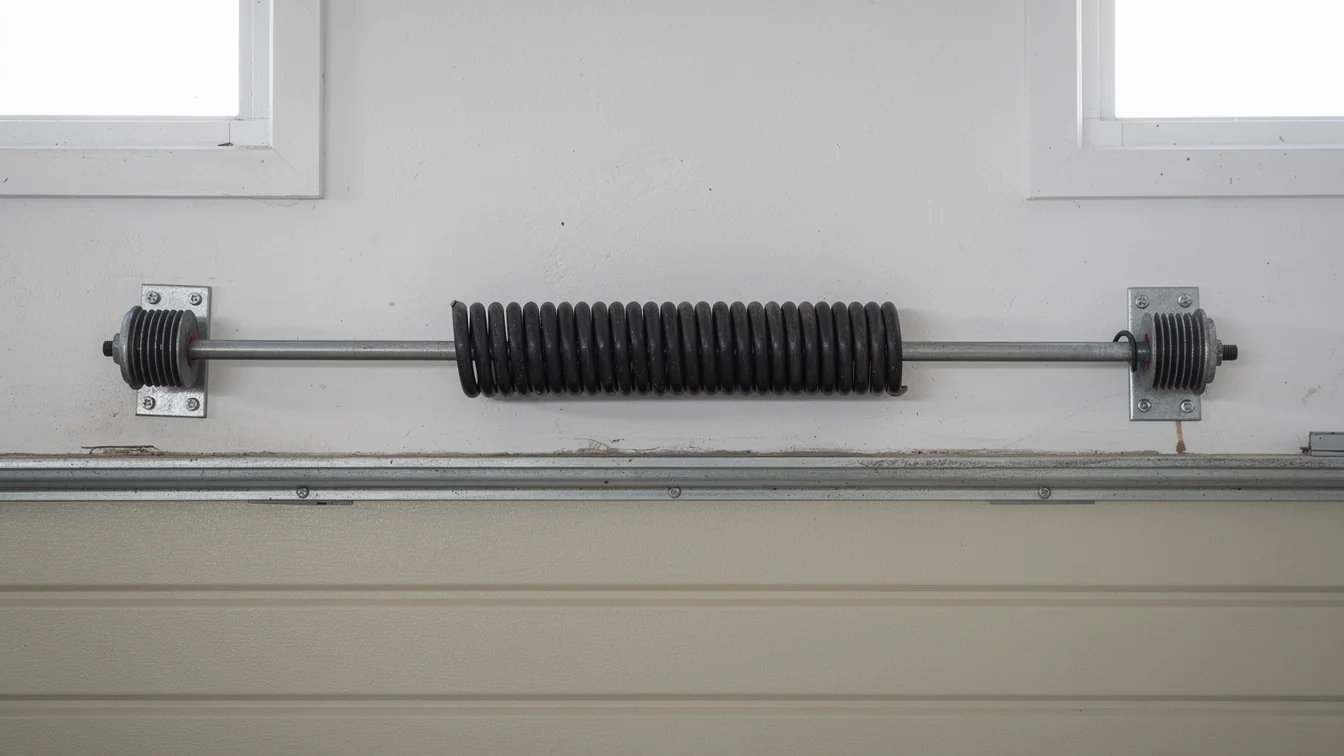
Before you decide it's the cold, look at the spring itself. Open the garage, kill the opener power, and look at the torsion spring above the door track. A gap in the coil, where the metal has visibly separated, means it's already broken and the door is running on one spring instead of two, or none at all. Don't try to open the door by hand to test this; a broken spring under tension is the reason people get hurt pulling on a cord that's no longer doing its job.
If the spring looks intact, check the cable wound around the drum at each end of the spring. Fraying or a cable that's come off the drum will mimic the sag of a broken spring and gets misdiagnosed as a spring problem constantly.
Rust on the coils is also worth a look. It doesn't cause a sudden break on its own, but combined with decades of cycles on original hardware, it's one more reason a spring that was already near the end of its rated life finally gives out. None of this is a repair you should attempt yourself once you've confirmed it's the spring. This is a diagnostic step, not a fix.
What we find
The Situation
Across the 14 named areas that make up this service territory, most of the housing dates to the 1960s and 70s, sitting inside that broader 1956-to-1997 build window. A lot of these garages still have the original torsion hardware, or a first replacement spring installed decades ago by whoever owned the house before. Either way, the spring has usually seen more cycles than its rating allows for.
There are roughly 51,208 households across this service area, with 25,364 of them owner-occupied houses rather than rentals or condos. In a lot of those owner-occupied houses, the garage door spring has never been touched since the day the house was built. Nobody thinks about a spring until it's lying in two pieces on the garage floor.
Median household income here runs around $126,937, which matters for one practical reason: when a spring goes, most owners in this town opt for a straight replacement rather than trying to nurse an old one along with a tension adjustment. Given how far past the rated cycle count a lot of these springs already are, that's usually the right call anyway.
How we work
What Local Conditions Do
Mild temperate conditions cut both ways. The good news is that springs here aren't getting the freeze-thaw stress that shortens spring life in colder climates, so you're not fighting the weather on top of everything else. The bad news is that mild weather doesn't slow down mechanical fatigue, and it doesn't reset the cycle counter on a 1970s-era torsion spring. The spring doesn't know the forecast. It knows how many times it's wound and unwound.
What this means in practice: if your spring breaks on a cold morning in Camarillo, the cold is probably just when you noticed it, not why it happened. The real driver is almost always a spring that was already near or past its rated cycle life, installed on a house old enough that the hardware is original or close to it.
One honest limitation: original torsion hardware on some of the older houses in this area doesn't always match current stock sizes, so a repair on an unusually old setup can mean a short wait on the right part rather than a same-day swap. It's worth knowing going in, especially on houses toward the early end of the 1956 build range.
Talk to a local pro
Garage door trouble in Camarillo?
Same-day service with honest, upfront quotes.