Local detail
What Most People Get Wrong
Most homeowners here assume a garage door that still opens and closes is a door that's fine. In Camarillo, where the housing stock runs 1956 through 1997 with a median build year of 1976, that assumption misses the point. A door from that era was built to a standard that didn't require insulation at all - it's a single layer of steel or wood, no foam core, no thermal break. It still works mechanically. It just does nothing to keep the garage, and whatever sits against the shared wall, at a stable temperature.
The other mistake is treating a sagging or dented door as cosmetic. Across the 14 named areas that make up most of Camarillo's 1960s-70s tract construction, doors from that build window are now 50 to 65 years old. Steel fatigues, wood delaminates at the bottom panel, and the original hardware was never rated for the cycle count a door sees over six decades. People replace the opener and leave the door, when often it's the door that's the actual liability.
We're not going to tell you every old door needs replacing. Plenty of 1970s doors are structurally sound and just need new rollers and a spring swap. But if yours is original to a house built in that median 1976 window, insulation was never part of the design - it's not something that failed, it's something that was never there.
The area
Checking It Yourself
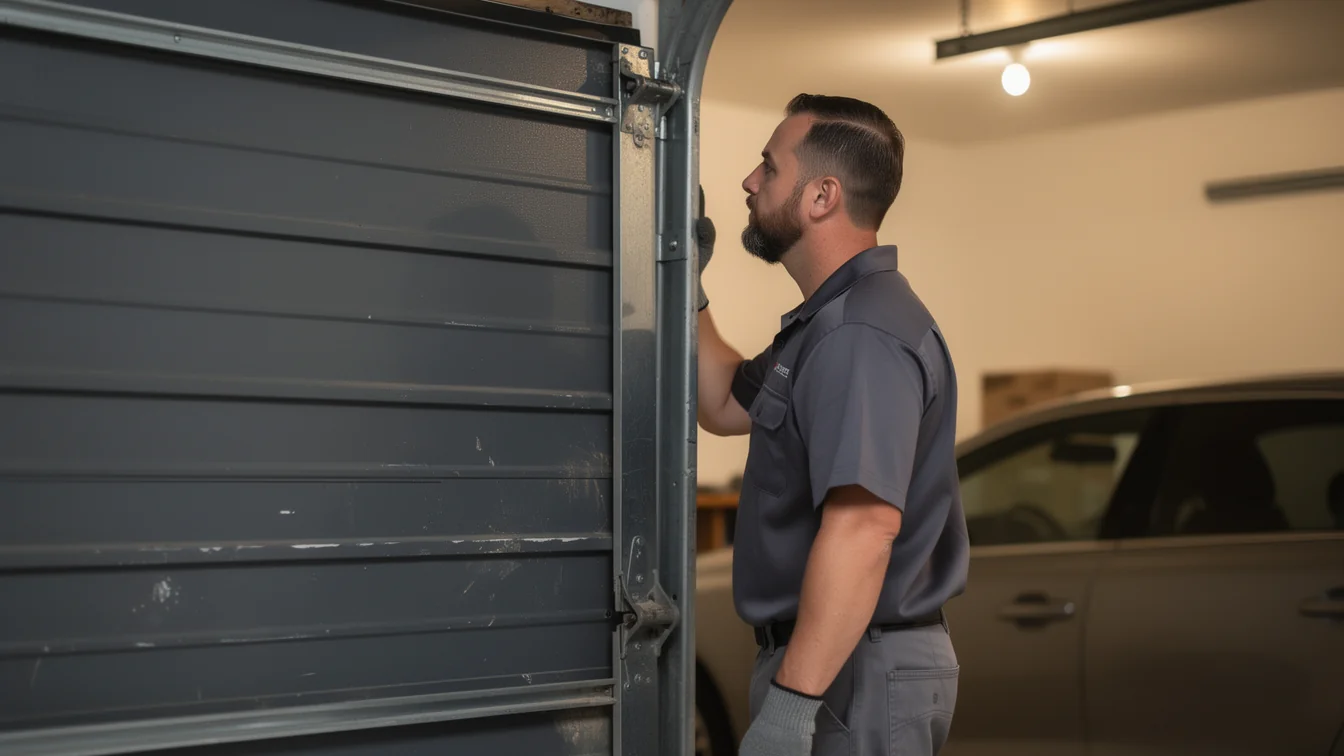
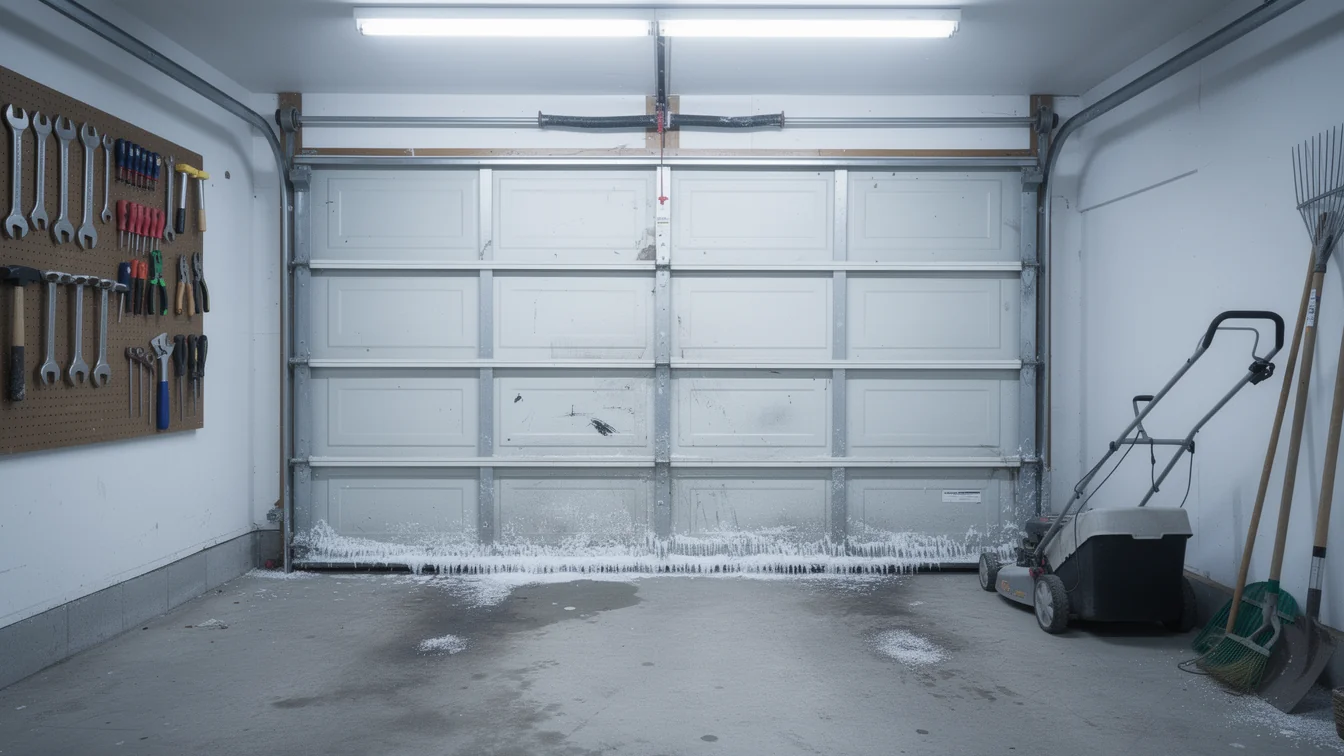
Look at the inside face of the door. If you see a flat, featureless steel or wood panel with no foam backing and no interior skin, that's a non-insulated door - standard for anything built in the pre-code window that covers most of Camarillo's housing. Rap on it with a knuckle. A hollow, tinny sound means a single layer of material with an air gap behind it, not foam.
Check the bottom seal next. On a 1960s or 70s door, the original rubber astragal is almost always hardened or cracked by now, and that gap is where outside air actually gets in, insulated panel or not. Camarillo sits in a mild temperate climate band, so you're not fighting hard freezes, but temperature swings between day and night still move through an uninsulated door and make an attached garage noticeably less stable than the rest of the house.
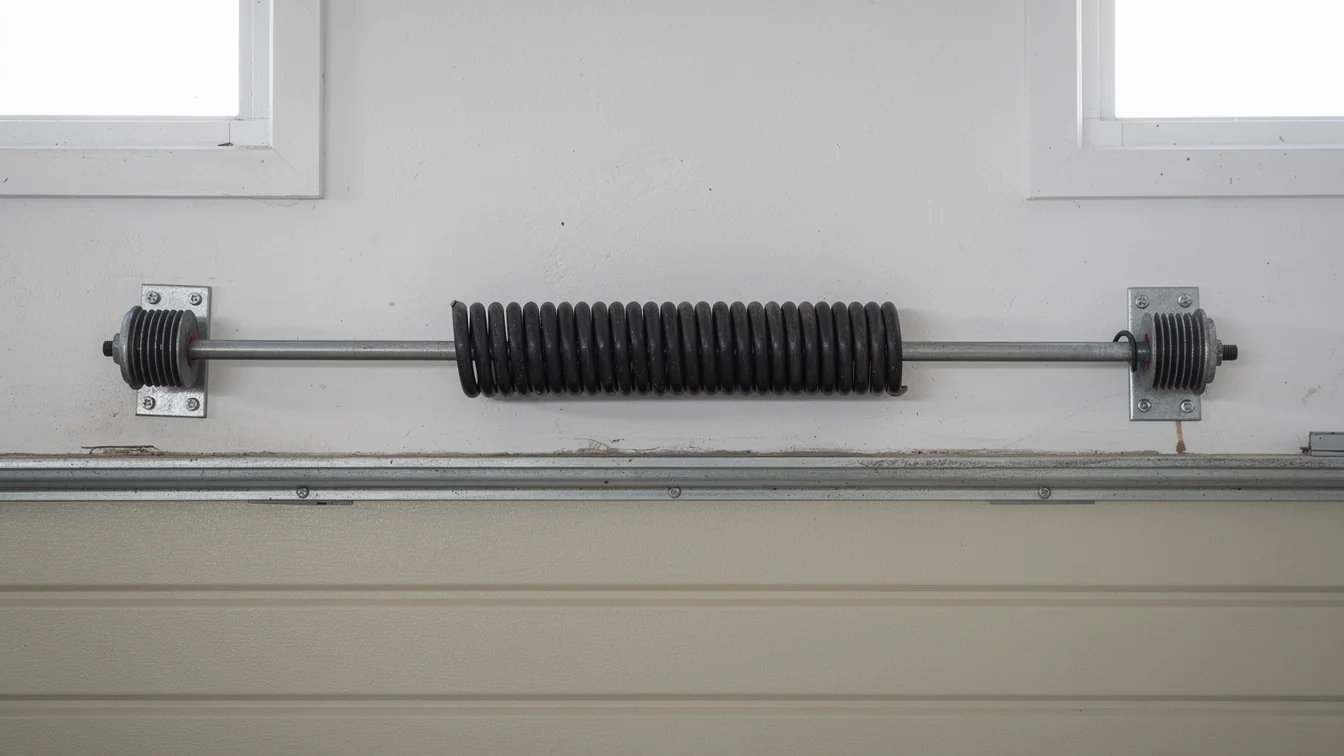
One honest limitation: we can tell you a door is uninsulated just by looking at it, but we can't tell you from the driveway whether the springs or torsion hardware behind it are near failure. That needs a hands-off inspection with the door disengaged from the opener, because the stored tension in an old spring is not something you want to test by eye.
What we find
The Situation
Camarillo's housing didn't arrive all at once. The stock spans 1956 to 1997, but the bulk of it - across the 14 named areas that make up the service area - is concentrated in that 1960s-70s tract-building period, with a median year of 1976. That single fact explains most of the garage doors we see: single-layer steel, no foam, original torsion springs on houses that are now well past the design life of that hardware.
With 51,208 households in the area and roughly half of those, 25,364, owner-occupied, there's a large base of houses from that same era, which means a lot of original equipment still in service. Median household income here runs $126,937, which tells you something about what owners choose to do about it: replace with a properly insulated door rather than patch the old one indefinitely, once they understand what they're looking at.
The mild temperate climate is part of why so many of these old doors have lasted this long without obvious failure. Nothing about the weather forces the issue the way a harsh freeze-thaw cycle would elsewhere. That's not a reason to ignore an uninsulated door - it's the reason nobody's been forced to deal with it yet.
How we work
What Local Conditions Do
Camarillo's mild temperate climate is forgiving in one sense and misleading in another. It won't crack a steel panel the way a hard freeze would, so a 1976-era door can look fine on the outside for decades. But mild doesn't mean stable - day-to-night temperature swings still pass straight through an uninsulated panel, and in an attached garage that means the wall shared with the living space keeps shifting temperature too.
Because so much of the local stock dates to that same pre-insulation-code window, this isn't a one-house problem - it's a pattern across the tract neighborhoods built in the 1960s and 70s. If you're near Somis, El Rio, or Santa Rosa Valley, the housing age runs the same, so the same original-door situation applies there as much as it does closer to the center of Camarillo.
What we'd actually recommend depends on the door's condition, not just its age. An uninsulated door that's otherwise square, with intact tracks and hardware, can sometimes just get a new bottom seal and call it done. One that's dented, off-square, or still running the original torsion spring from a 1970s build is a different conversation - at that point you're not insulating an old door, you're deciding whether to replace it.
Talk to a local pro
Garage door trouble in Camarillo?
Same-day service with honest, upfront quotes.